Research · Design
Price, stock, renewals
Pilly · a two-sided pharmacy app · MSc Interaction Design thesis, spring 2022 Sole researcher and designer 18 hours observed · 147 interactions · 6 interviews · ~40-screen Android prototype · 7-screen pharmacist dashboard
I spent 18 hours watching three pharmacy counters. The most common subject wasn’t the medicine. It was the price — and, on the phone, whether it was in stock.
The setup
Pilly was my thesis for the joint MSc in Interaction Design (Cyprus University of Technology and Tallinn University), submitted in May 2022. By then I had been co-running a pharmacy on Rhodes since 2011.
The research on pharmacist–patient communication is mostly about counselling: how much the pharmacist explains, what, and in what style. The thesis asked a wider question: what actually happens between pharmacist and patient in a Greek pharmacy, at the counter and on the phone, and what could support it?
Three research questions:
- How could pharmacists and assistants be supported at the counter?
- What do patients need there, and how could it be met?
- How could both sides handle the remote contact — calls, messages — better?
What I ran
Observation first. A work-sampling study in three pharmacies on Rhodes, March 2022: two three-hour sessions in each, mornings and one afternoon, one Saturday. Each pharmacy’s owner gave consent beforehand, but not the content of the checklist, to limit people performing for the observer.
The instrument was a 38-item checklist: 17 items from published pharmacy studies, and 21 I added for how Greek pharmacies work — partial collection, debts, shortages, the phone, and whether a CRM was used. To my knowledge, work-sampling had not been used in Greek pharmacies before.
- 18 hours · 3 pharmacies · 3 pharmacists and 3 assistants observed
- 147 interactions · 517 data points
Then interviews. Six semi-structured interviews — three pharmacists (not the ones I had observed) and three patients with chronic conditions, all regular pharmacy customers. 183 minutes in total, transcribed verbatim, and thematically analysed in NVivo: 121 codes, merged to 55, supporting 8 themes.
What the counter showed
What came up, out of 147 interactions:
| Observed | Share |
|---|---|
| Administrative — price, generic availability, renewals | 58.5% |
| Name of the medicine | 51.0% |
| People waiting their turn | 37.4% |
| Over-the-counter advice | 34.7% |
| No information at all — only dispensing | 33.3% |
| Purpose of the medicine | 25.9% |
| How to use it | 16.3% |
| Interactions with other medicines | 2.7% |
| Side effects | 0.7% — once |
| A CRM system used | 0 |
The counselling the literature focuses on — side effects, interactions, contraindications — was the rarest thing I saw. Side effects came up once in 147 interactions. Price, generics and renewals came up in more than half.
And smaller signals that turned out to matter:
- Patients phoned 11 times to ask whether something was in stock.
- 7 times a patient paid off an old debt; twice someone asked to pay next time.
- 6.8% couldn’t get everything on the prescription because of shortages, and would have to come back.
- 5.4% chose to take only part of their prescription.
- One of the three pharmacies had a CRM installed. Nobody used it.
What people told me
Eight themes came out of the interviews. The ones that shaped the design:
Chronic patients don’t want the leaflet read to them again. They want it fast.
“If it is a recurring prescription, they usually do not want you to remind them… many times we have faced the need for fast and prompt service.” — a pharmacist
There is still a minimum. Both sides agreed on it: interactions, side effects, dosage. The thesis calls this functional information — the least a patient should leave with.
The phone breaks the counter.
“Usually the breaks have to do with the phones ringing.” — a pharmacist
Patients are cut off from their own medication. They photograph prescriptions, describe boxes, phone the pharmacy from the doctor’s office because they can’t remember a brand name.
“…an application would be very useful to know… when the medicines are ready or for the availability of medicines, my history of medicines.” — a patient
And one practice the checklist didn’t count, but I asked about in every interview: lending medicine.
Borrowed medicines
In Greek pharmacies a regular patient can take a medicine now and bring the prescription later — because the doctor isn’t available, or because it’s urgent. It is a favour, and it keeps people loyal. It also costs the pharmacy money, because people forget.
“There are losses… many times they forget that something like this has happened.” — a pharmacist
“I do not mind the loan but to be sure that the pharmacist will not be harmed by it.” — a pharmacist
That second line is close to a brief. It doesn’t ask for the practice to stop. It asks for it to stop costing money.
So in Pilly a loan is recorded on both sides:
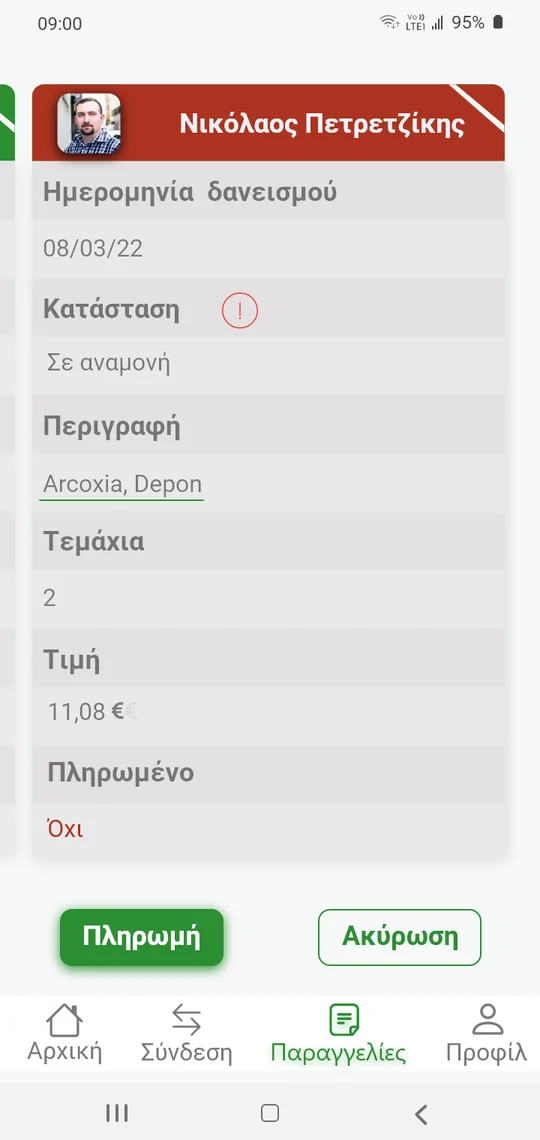
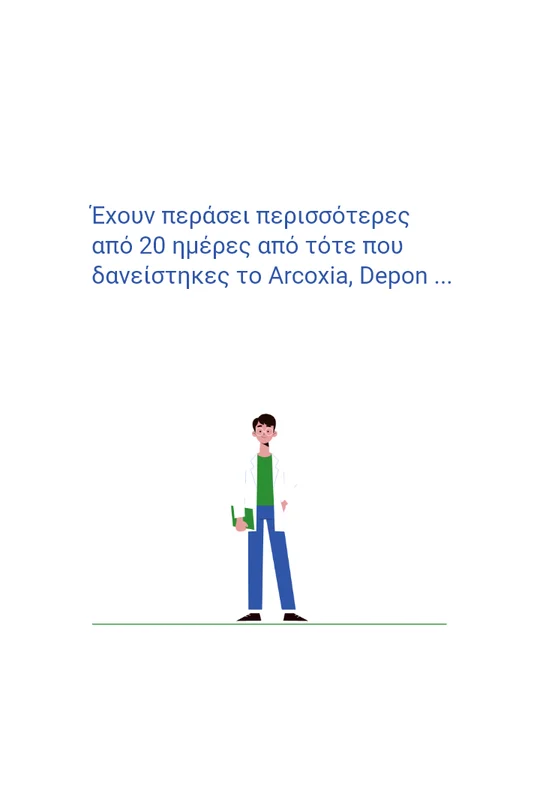
- The patient sees it in their orders as a red card — borrowed on 08/03/22 · Arcoxia, Depon · paid: no — and after 20 days, a reminder: “More than 20 days have passed since you borrowed Arcoxia, Depon…”
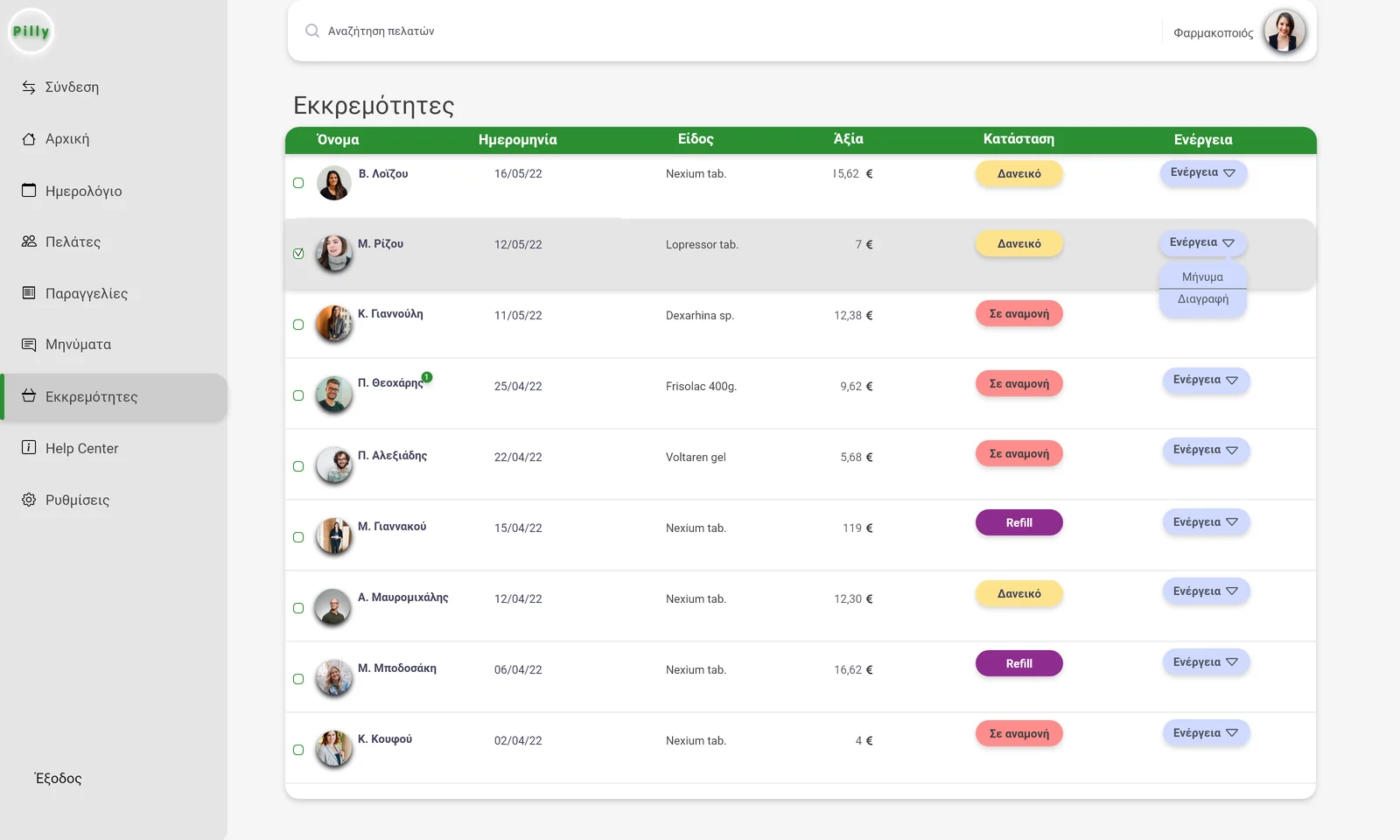
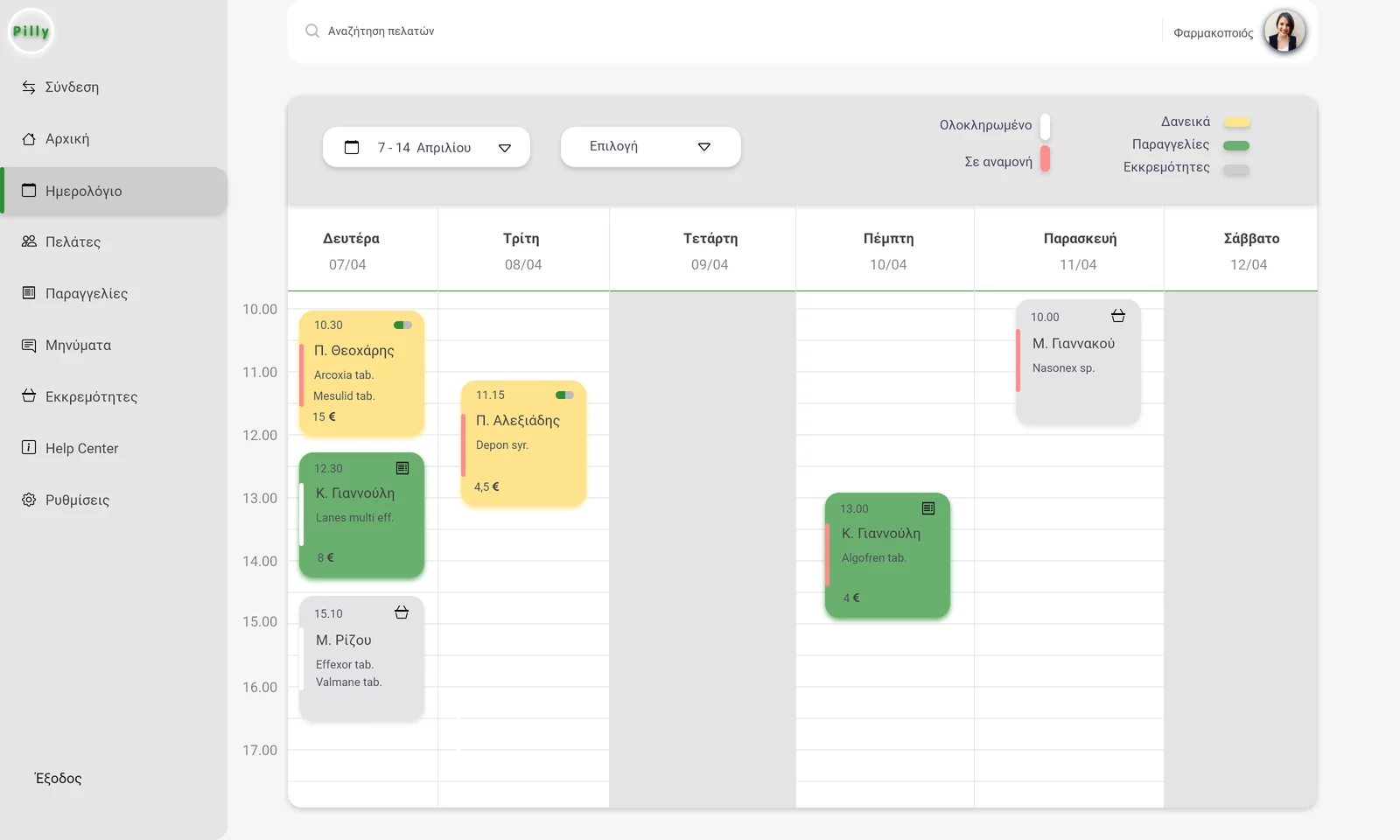
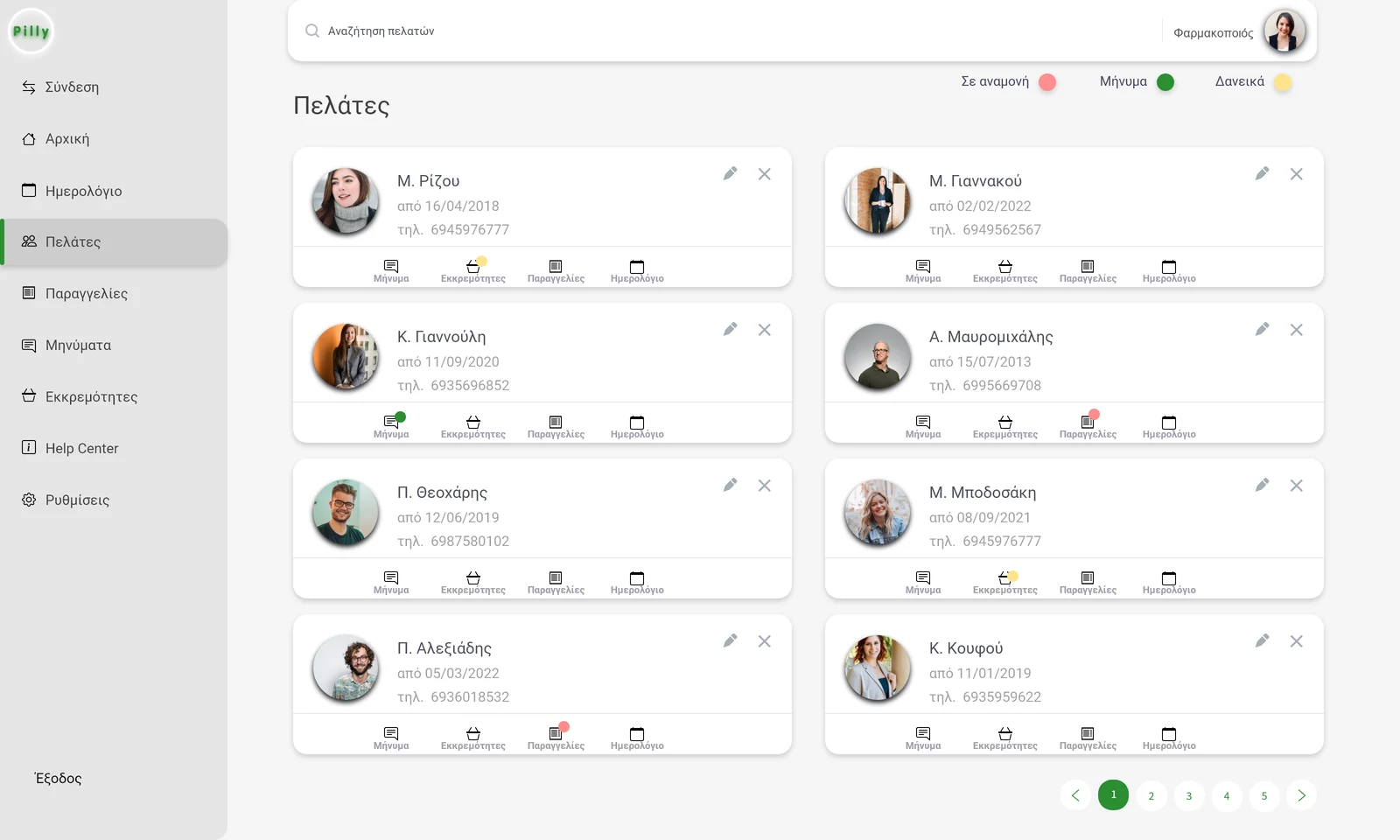
- The pharmacist sees it in Pending (Εκκρεμότητες), tagged Δανεικό, next to items waiting for stock and refills — and on the weekly calendar.
What I designed
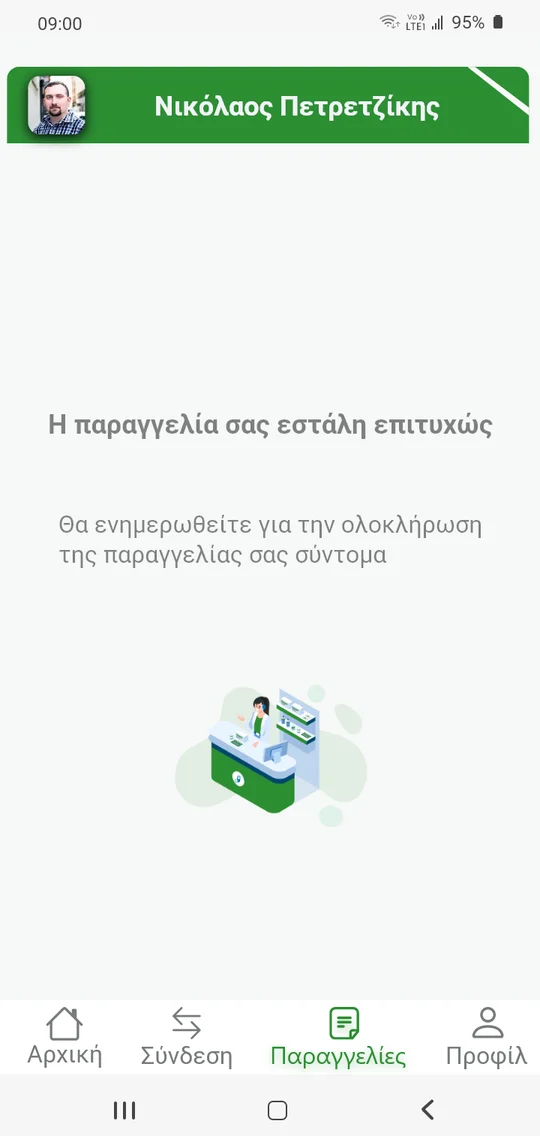
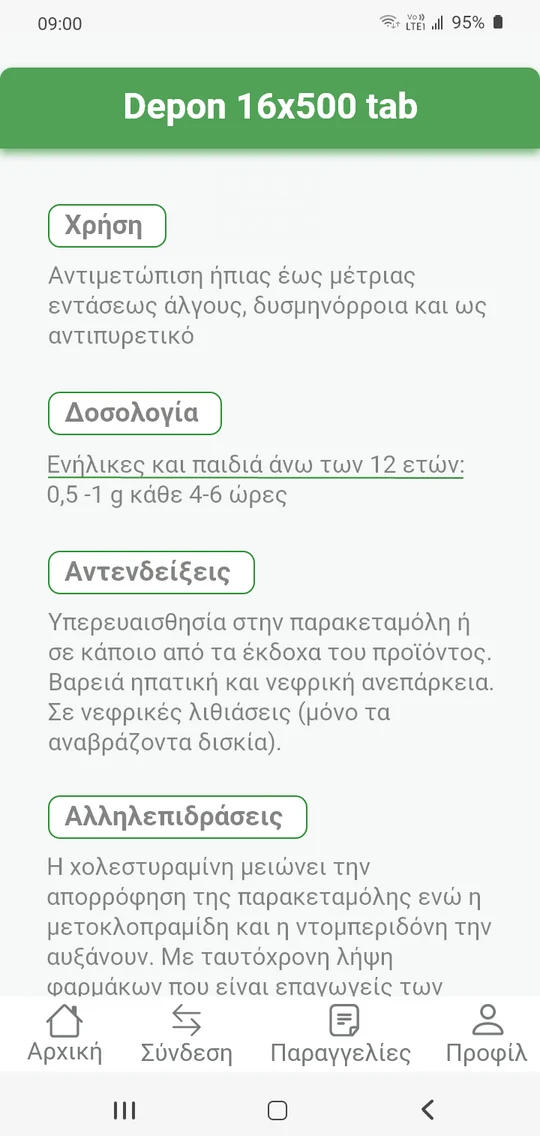
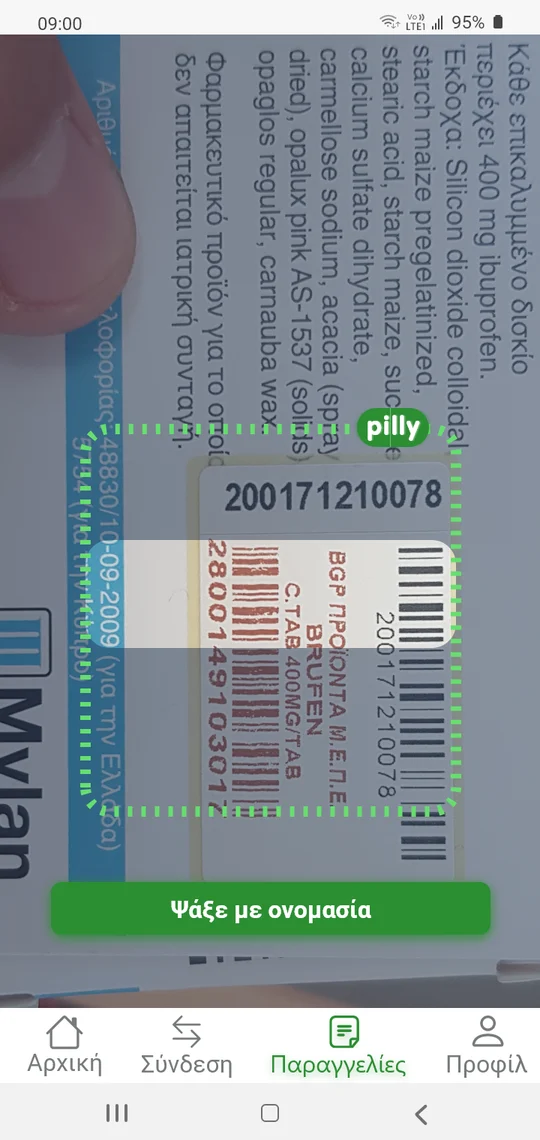
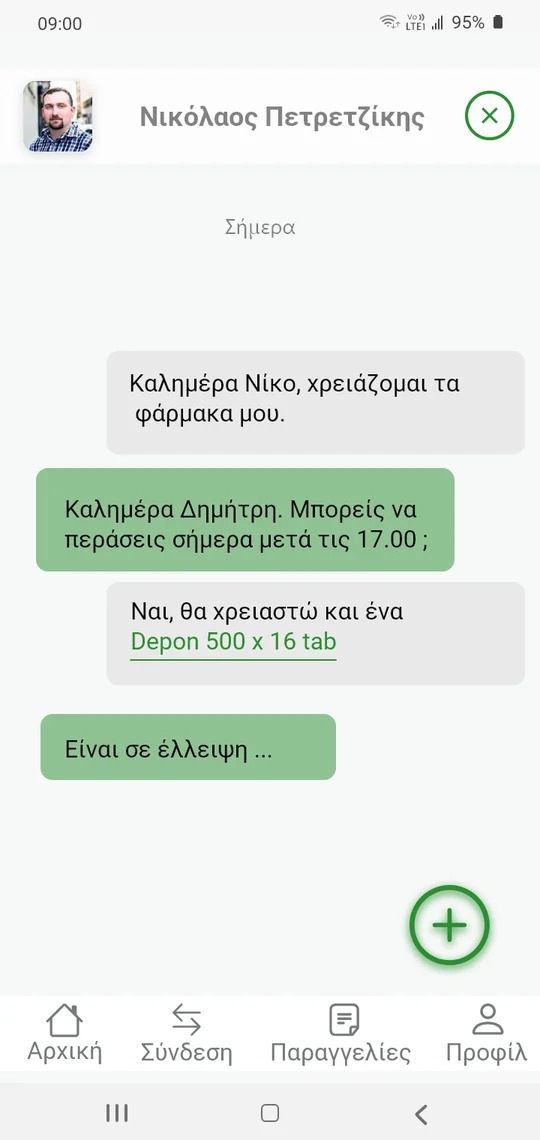
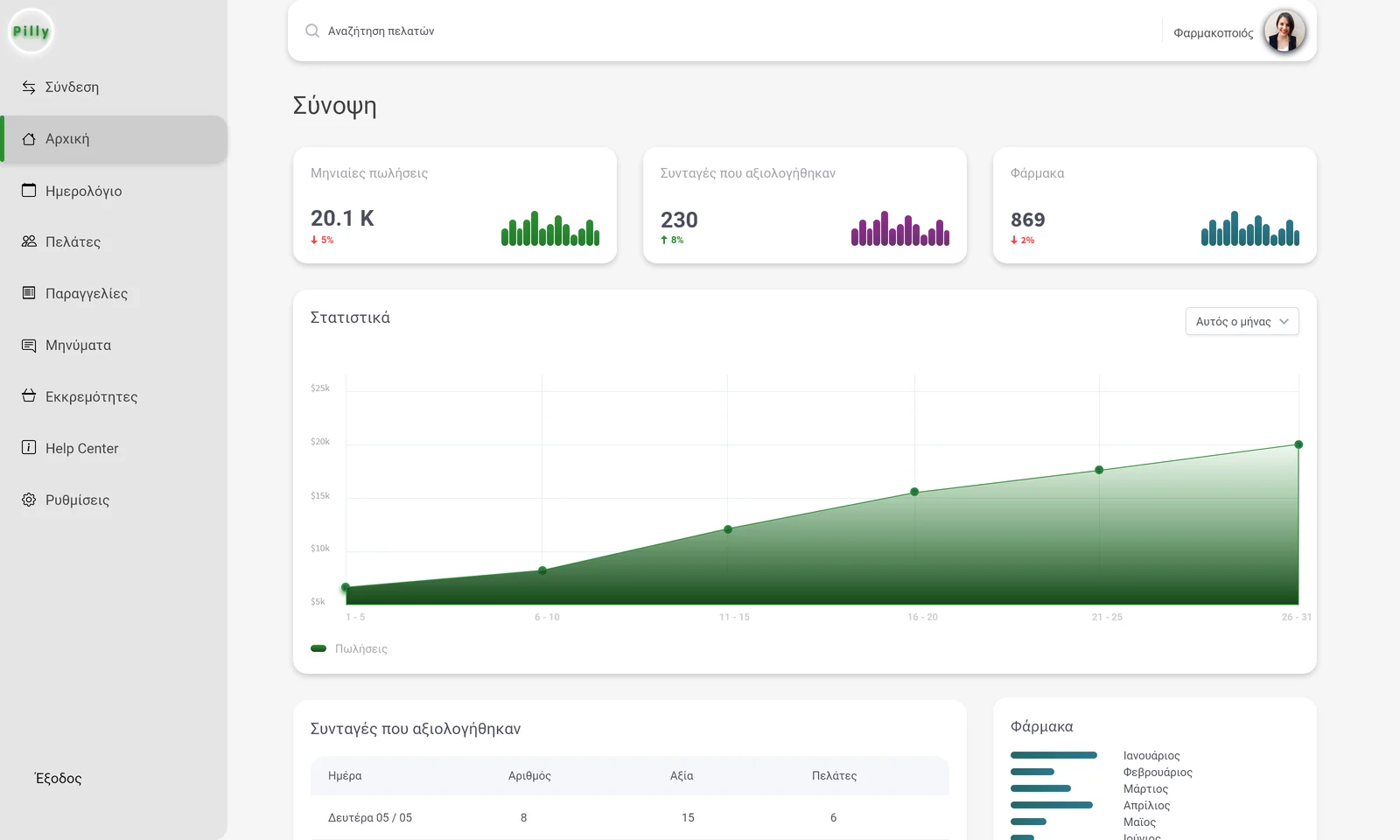
A patient app for Android — about 40 distinct screens, built in Adobe XD and wired as a clickable prototype. And a desktop system for the pharmacist — 7 screens.
The two connect when the patient pairs with their pharmacy using an 8-digit code, the same code on both screens. At that point the patient chooses what to share — past prescriptions, medicines beyond prescriptions, their social security number (ΑΜΚΑ) — and every transaction afterwards is saved on their side too.
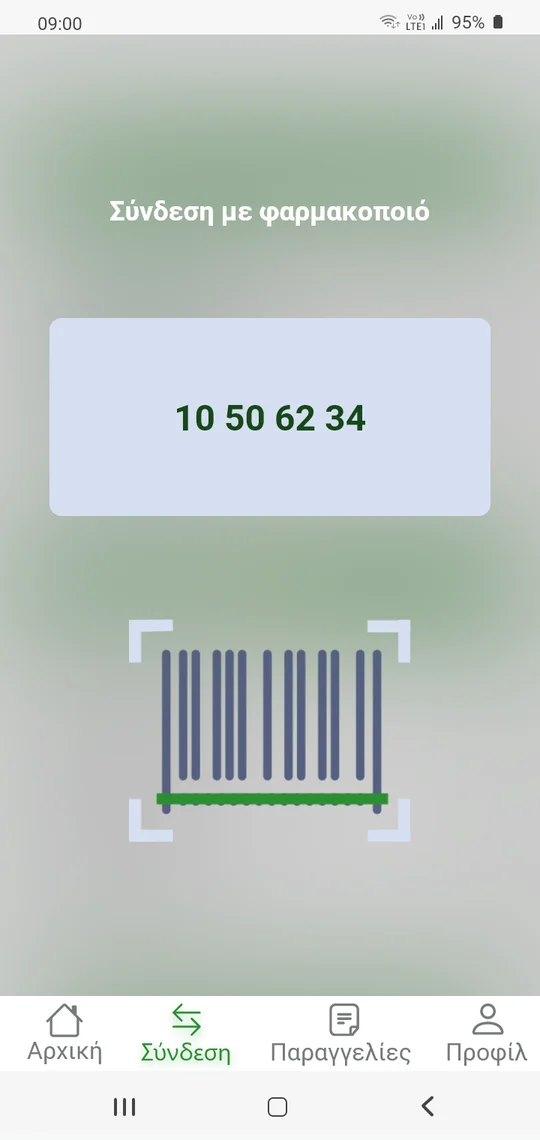
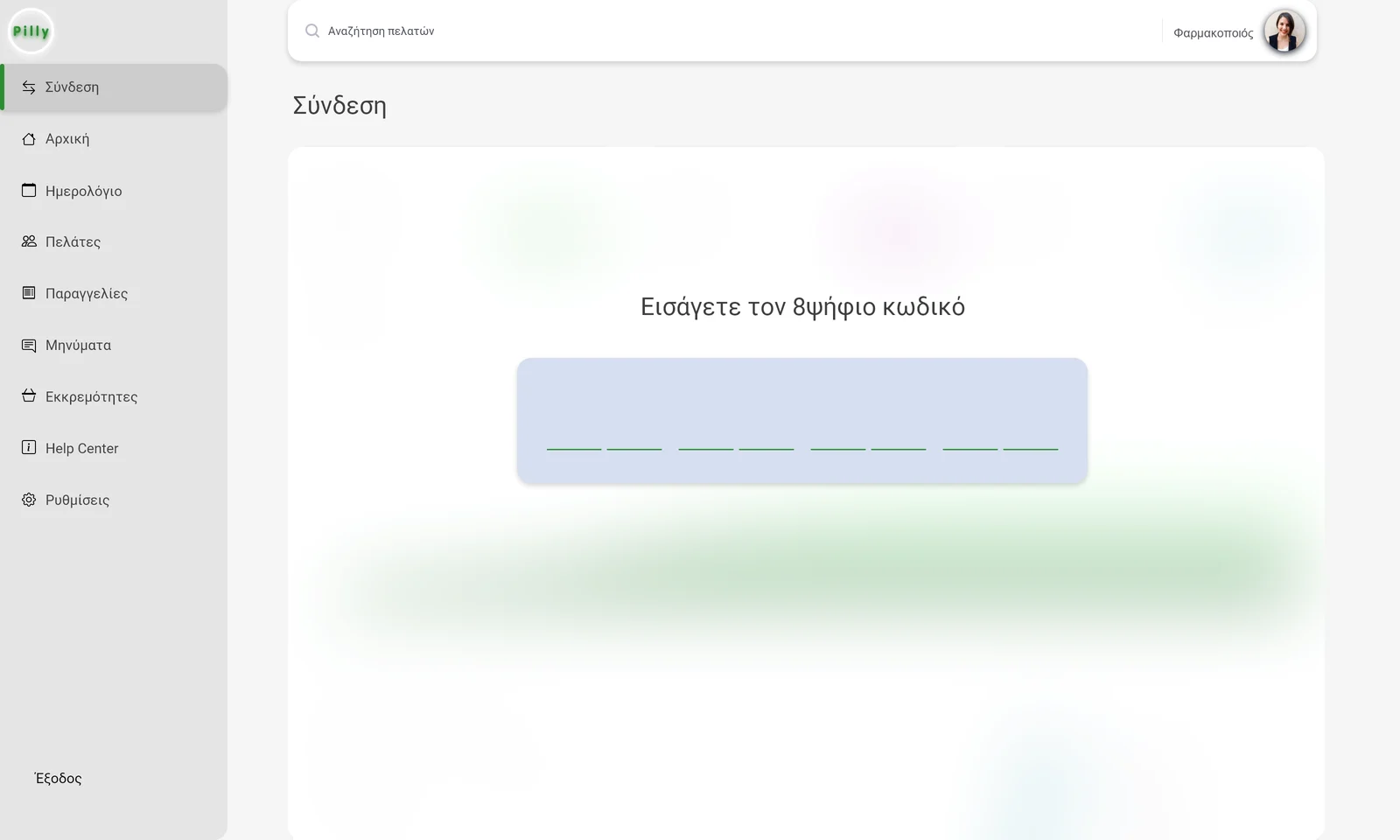
Each feature traces back to something observed or said:
| What I saw or heard | What Pilly does |
|---|---|
| Price, generics and renewals dominate the counter | Home shows this month’s spend by type; prescriptions show what’s ready |
| Patients take only part of a prescription | Prescription ready — swipe away what you don’t need, pay for the rest |
| 11 calls about stock; the phone breaks the counter | Orders and readiness in the app; text messaging with the pharmacist |
| Lending costs the pharmacy money | Borrowed medicines recorded on both sides, with a reminder |
| The agreed minimum: functional information | Drug info kept to use, dosage, contraindications, interactions |
| Patients can’t recall brand names | Pairing shares history with the pharmacy; scan the box’s barcode to find a medicine |
| Patients come in when they’ve run out | Refill timing estimated from pill counts, so the pharmacist knows who’s due |
| The pharmacist juggles counter, phone and paperwork | Dashboard: overview, calendar, customers, orders, messages, Pending |
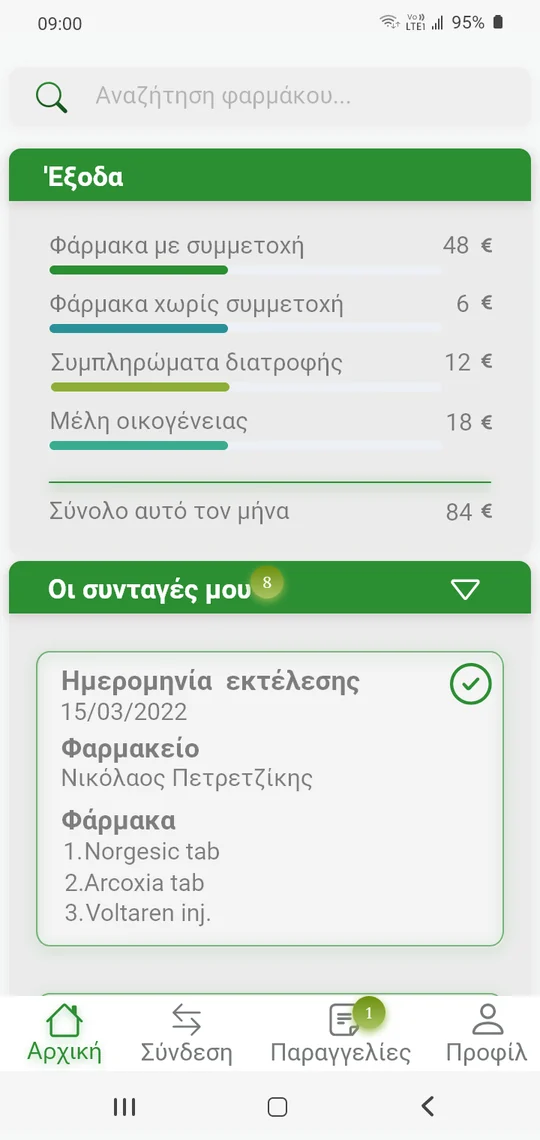
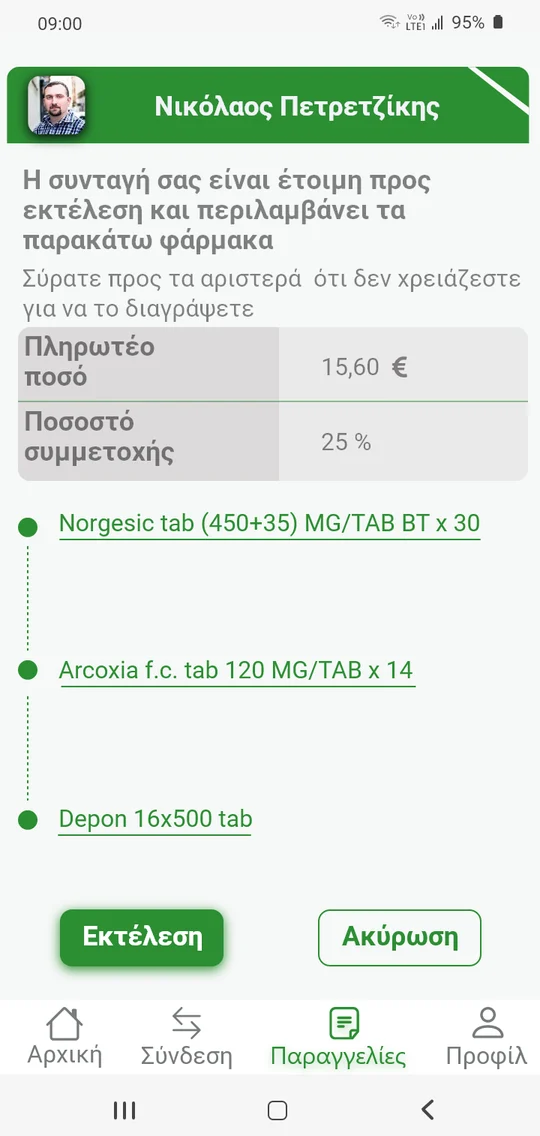
What it didn’t do
Pilly was never tested with users. The thesis says so — it is the most substantial limitation it lists. The prototype is clickable; it was never put in front of patients or pharmacists.
The sample was small and convenient: three pharmacies on one island, all the observed pharmacists women, three patients. Some patterns came through, but more people would have given them depth.
And it was never built.
Four years later
In April 2026 I picked Pilly up again. ChatGPT drafted a set of product documents — vision, user groups, a ranked problem set, feature priorities, a phased plan — and I reviewed them.
The ranked problems:
- Pharmacy communication is fragmented — calls, walk-ins, Viber, WhatsApp
- Refills are too manual — memory, paper, repeated calls
- Patients don’t know if something is available or ready
Those are the 2022 findings, ranked. The documents also add what the thesis didn’t have: a launch segment (the pharmacist, the staff, and existing loyal customers — chronic-therapy users, caregivers, repeat buyers) and an explicit Later list — loyalty, full ERP integration, rich health records.
Borrowed medicines are not in them.
Where it shows up now
The refill-timing idea — know who’s due before they run out — is close to something I’ve since built for my own pharmacy: a Power BI dashboard, still in beta, that follows our regular chronic patients and whether they come back on time, early or late.
What I’d do differently
- Test it. Five patients and a clickable prototype would have told me more about the borrowed- medicines card than any amount of reasoning about it.
- Widen the sample. One island and women pharmacists only — the patterns might hold, but I can’t show that they do.
Observation took place with each pharmacy owner’s consent; interviewees gave recorded oral consent, and were pseudonymised in the thesis. Quotes here are attributed by role only, in the thesis’s English translation. Every name, phone number and photo in the screens is invented or from a stock avatar library; one placeholder name has been replaced.